Programmatic SEO sounds cleaner than it is.
The pitch is simple: find a repeatable page pattern, combine it with structured data, and create pages at scale. Done well, it can build a useful site faster than writing every page by hand. Done badly, it creates thousands of thin pages nobody asked for and Google eventually treats it like the mess it is.
The trick is remembering that scale does not make a weak page better. It just makes the weakness louder.
What Programmatic SEO Actually Is
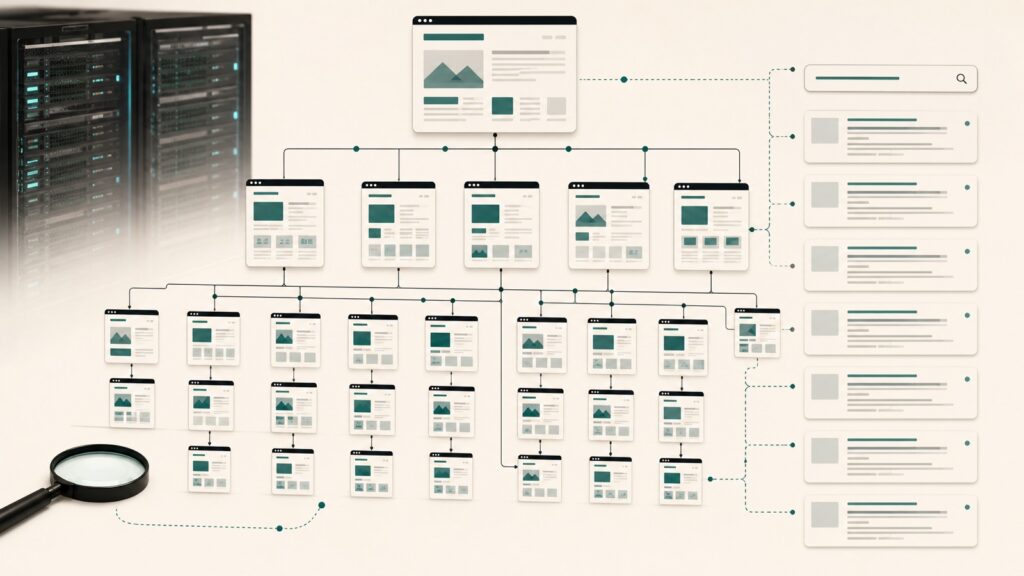
Programmatic SEO is a way to create many useful pages from a repeatable structure. Directories are the obvious example: city pages, category pages, location pages, comparison pages, or resource pages built from a database.
The page still has to serve a real search intent. That is the part people skip.
The Page Has to Deserve to Exist
Before making a template, ask the ugly question: would this page help someone if it had no SEO value?
If the answer is no, you are probably building search clutter.
A good programmatic page gives the visitor something specific: a list, a comparison, a local answer, a filtered resource, a map, a process, or a set of details that would be painful to gather manually.
Where Small Niche Sites Can Win
Small sites are not going to out-muscle giant domains on broad keywords. They can win by being more useful in a narrower lane.
- A directory for a specific need.
- A local resource that is cleaner than government pages.
- A comparison page for a niche audience.
- A location page that actually understands the local intent.
The advantage is focus. The risk is thinness.
What I Am Testing
The test is not “Can I create a lot of pages?” That is easy. The test is whether the pages are useful enough to index, rank, and earn trust over time.
For a directory-style site, I care about:
- Whether the page answers a specific local or niche query.
- Whether the data is complete enough to be useful.
- Whether the page has internal links that make sense.
- Whether Google indexes it without begging.
- Whether real visitors behave like the page helped them.
What I Would Avoid
- Creating pages for every possible keyword variation.
- Using AI filler to make thin pages look long.
- Launching thousands of URLs before testing a small batch.
- Ignoring duplicate intent.
- Building pages nobody would use if search engines vanished.
The Small Batch Approach
I would rather launch 50 solid pages and study what happens than launch 5,000 guesses and spend six months wondering why Google ignored them.
A small batch tells you whether the template works, whether the data is useful, whether the internal linking makes sense, and whether the site is earning impressions for the right queries.
Once the pattern proves itself, then scale it.
The Real Work Is Not the Template
The template is the easy part. The real work is data quality, intent matching, internal linking, updating stale pages, and knowing when a page should not exist.
Programmatic SEO is not a shortcut around usefulness. It is a way to scale usefulness once you have found the pattern.
That distinction matters. Google can smell the difference eventually. So can people.